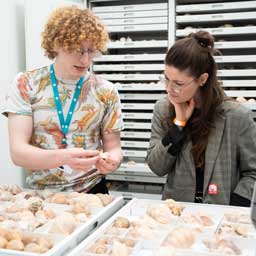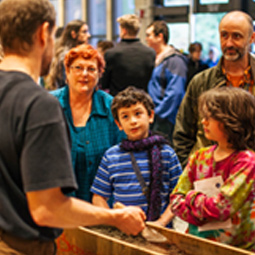

What is Voices in Science?
Voices in Science is designed to inspire the next generation of scientists, researchers, and engineers. It connects middle- and high-school students with scientists, Indigenous knowledge holders, and UW Lab experiences. Over 10 years, VIS has grown from nine middle school participants to a suite of free programs with virtual sessions, drop-in activities, and after-school teen cohorts.
Offerings include Teen Learning Resources, monthly STEAM Spotlight activities, a UW-wide Careers in STEM survey program, and Burke-ology — an in-depth exploration of an active Burke research field.
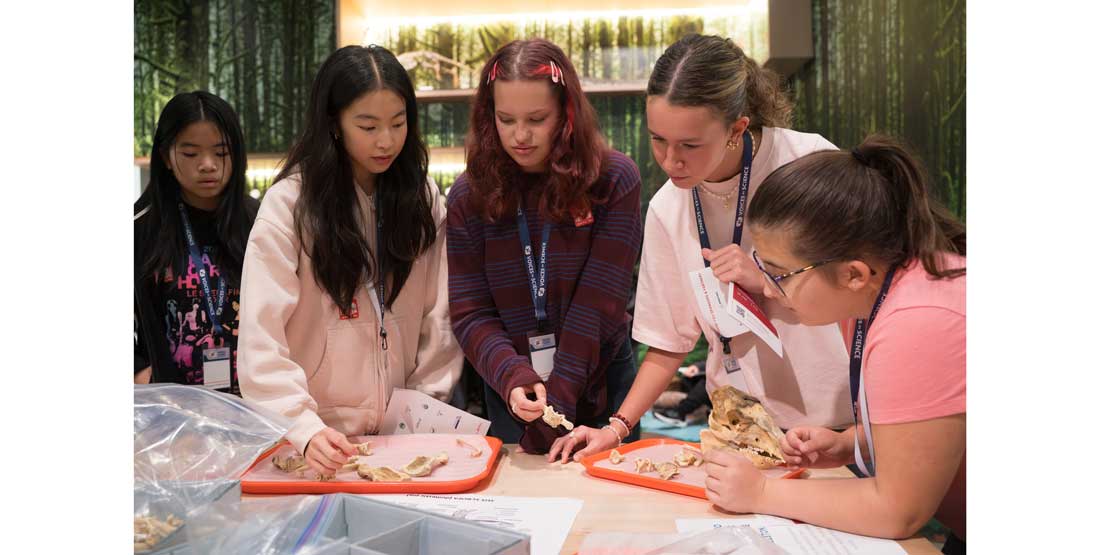
Voices in Science students interact with scientists and cultural experts who are conducting active research on a variety of topics.
Who do the teen cohorts serve?
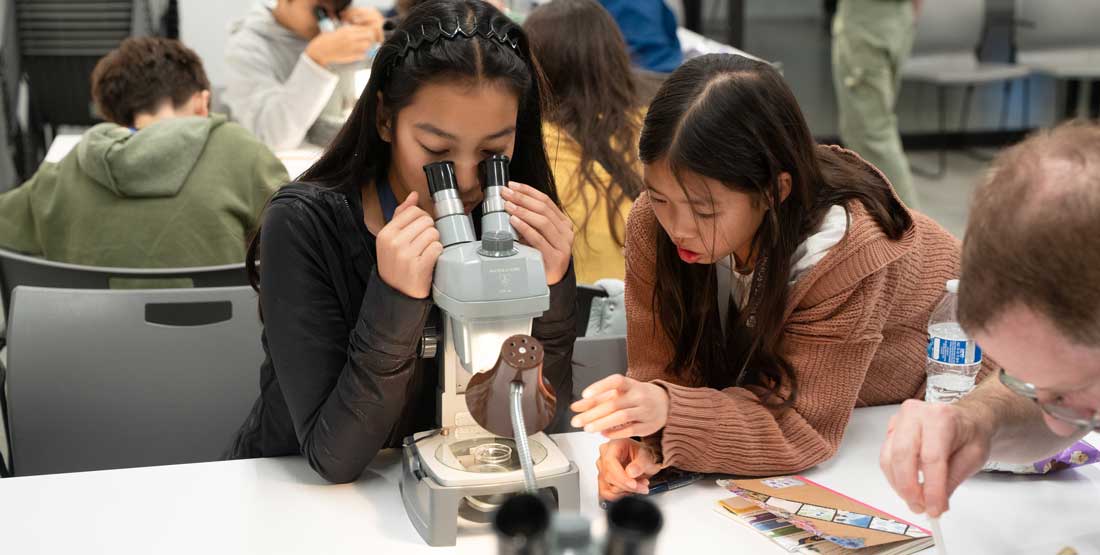
For middle-school students, Careers in STEM offers a collaborative and supportive environment to explore STEM fields. Priority goes to students seeking confidence-building opportunities and those with limited access to STEM role models and science resources.
Burke-ology offers high-school students an in-depth study program working with a Burke collections manager or curator in a Burke lab to perform research and present the findings to the public in a symposium at the end of the program.
This year, Careers in STEM and Burke-ology will serve more than 60 students. To date, participation has included students from more than 70 schools in the Puget Sound region, and more than 50 UW educators contributing from across fields ranging from medical physics to mathematics to geochemistry.
What makes Careers in STEM and Burke-ology unique?
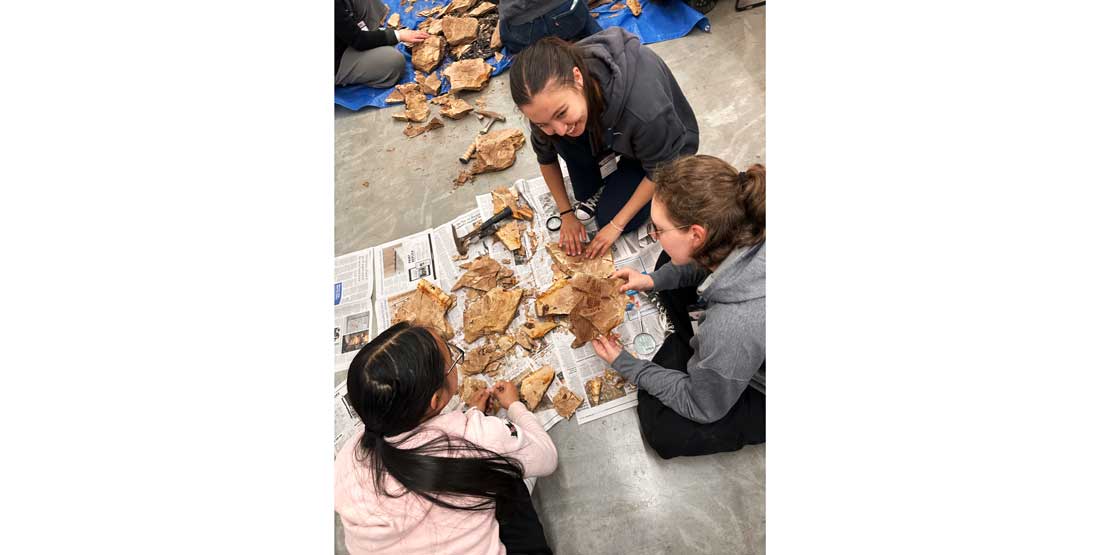
The students interact with scientists and cultural experts who are conducting active research on a variety of topics ranging from cleaning and assembling dinosaur fossils in the paleontology lab, to using photography to create 3-D models of hummingbirds. Working in a lab space that features floor to ceiling glass windows looking out at the exhibition spaces, students can share their excitement and learning experiences as visible role models to the public, often inspiring visiting families who recognize them as “scientists in action.”
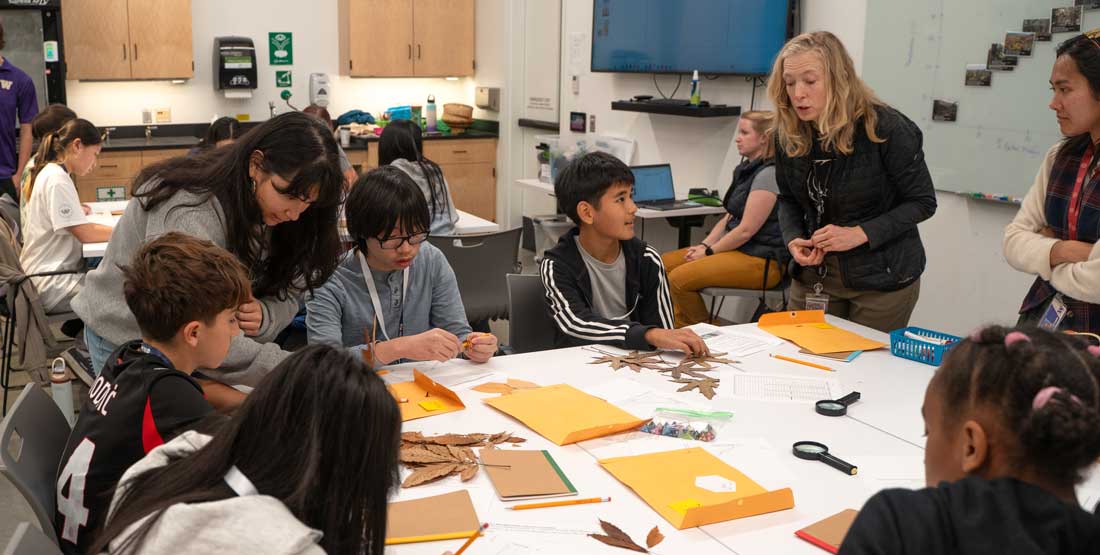
Voices in Science programs build confidence, interest, skills, and STEM knowledge.
What is the impact?
One student was so fascinated by the work she saw at the Herbarium that she spent a summer collecting her own specimens and practicing mounting, which included a rare specimen that will become part of the UW Herbarium collection and database archive. She is now pursuing plant sciences in college and has expressed interest in coming back to Voices in Science as a student mentor for the next paleobotany program.
VIS programs build confidence, interest, skills, and STEM knowledge. Students often transform from hesitant learners into capable science interpreters, with many launching community science clubs, research projects, or pursuing STEM degrees. As one student shared, “I like science a lot more than I thought I did… I have enjoyed science class in school even more.”
What challenges does the program face?
Demand for teen STEM opportunities far exceeds current staffing and funding. We’re seeking donations to keep programs free and expand our learning pipeline into new opportunities for teens.
How can we learn more?
Stay up to date with Voices in Science programs and registration opportunities by subscribing to our Youth & Family Programs newsletter.
Be sure to join us for Free First Thursday Burke-ology symposiums on March 5 and June 4, 2026, featuring student ichthyology and paleontology research. All are welcome!
Voices in Science is supported in part by a grant from the Boeing Company.