
Reclaiming Our Roots: Cultural Reflections by Incarcerated Artists
Artists Mikailah Sweetgrass-Turner and Bill Gumabon
Date & Time
August 22–27, 2026
10 a.m. – 5 p.m.
This event is in the past.
Tickets
Included with museum admission;
FREE for Burke members
Not a member? Join today.
The Burke Museum is partnering with Solidarity Art Collective to host a month-long pop-up exhibit July 30 – August 27, 2026, featuring artwork by incarcerated artists Billy Gumabon, Jacquavious, Lawrence Jenkins, Songkoun Sao, Siaosi Scanlan, Mikailah Sweetgrass-Turner, Bonifacio Reynolds, and Edmund Washington.
August 22–27, artwork by Mikailah Sweetgrass-Turner and Bill Gumabon will be on display in the Artist Studio, accompanied by audio interviews with each artist, and a corresponding item from the museum’s Heritage: Arts & Cultures collections, which served as inspiration for the artists to create pieces paying homage to their roots.
About the Artists
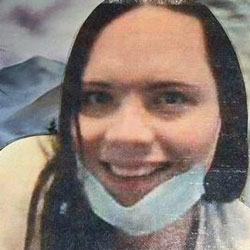 Mikailah Sweetgrass-Turner (she/her)
Hello, my name is Mikailah Sweetgrass-Turner. I am an incarcerated Indigenous American and Filipino transgender woman. I have been incarcerated for over twenty years. I began my artistic journey during my formative years. I realized early on that I had some talent for drawing. I did not realize my talent for beading until later in life. During incarceration I found my culture. While exploring what it meant to be biracial I found beading. I excelled at this method of artistic expression. I spent many years honing both my drawing and beading skills. it is through artistic expression that I have found meaning and redemption. The discipline necessary to become good at any artistic pursuit, has prepared me for returning to a life free of the shackles of my past, and to make something special out of my life.
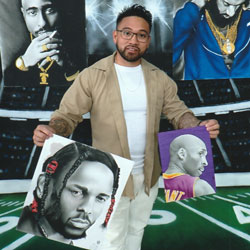 Billy Gumabon (he/him)
Billy Gumabon, known as Billy G, is an incarcerated Filipino artist and organizer whose work was born behind prison walls. Drawing from the realities of confinement and struggle, Billy transforms limited materials into Artistry of expression, survival, and hope. His art explores a variety of art mediums (paint, charcoal, graphite, colored pencils). Every piece is an act of resistance and tells a story of reclaiming autonomy, agency, purpose and liberation.
If you are interested in commissioning any art pieces from Billy you can follow him and reach out on Instagram (@billyg_artistry) or contact him directly on securustech.net (Billy Gumabon DOC# 344209)
About the Exhibit
Reclaiming Our Roots: Cultural Reflections by Incarcerated Artists highlights the importance and beauty of connecting with one’s culture while incarcerated. Several of the featured artists are members and leaders of cultural awareness groups designed to educate BIPOC prisoners about their cultural identities and promote personal growth and community building. In recent years, policy changes within the Washington State Department of Corrections have severely limited free cultural expression by disallowing peer-led programming and censoring cultural groups’ curricula, events, and activities.
Having cultural spaces inside where prisoners can find belonging and collective community is a vital lifeline. It keeps them rooted in their identity instead of the labels placed on them by the system and forges invaluable connections with communities outside prison. Cultural art and expression are inextricably linked with cultural education and empowerment that transcends the confines of prison politics. Therefore, the practice of culture — for prisoners — is resistance just as much as it is restoration and liberation.
Each of the participating artists identified regions and cultures from their ancestry, and staff at the Burke Museum helped them choose a corresponding item from the museum’s Heritage: Arts & Cultures collections. The selected items served as inspiration for the artists to create pieces paying homage to their roots. The featured artworks were inspired by items from Ivory Coast, Ghana, Sierra Leone, Samoa, Mexico, Philippines, and Cambodia, as well as the Echota Cherokee and Blackfeet Nation tribes. Some artists have selected culturally significant creations from past Solidarity Art Collective shows to display alongside their specially curated pieces.
The exhibit will feature recorded commentary from artists about partnering with the Burke Museum and how the experience impacted their connection to the past. These artists have deep love for their history, their culture, and their people as a whole. There is no greater opportunity for them to express this than the one the Burke Museum has extended through this collaboration. This process of connecting with previously unknown parts of their history has already breathed new life into the movement for cultural preservation behind bars.