
Eric-Paul Riege in the Artist Studio
Date & Time
Thursday, April 2, 2026
10 a.m. – 3 p.m.
This event is in the past.
Tickets
FREE admission for
Free First Thursday
Eric-Paul Riege (Diné) will share a combination of sewing, weaving, and making and unmaking with various organic and synthetic fiber materials.
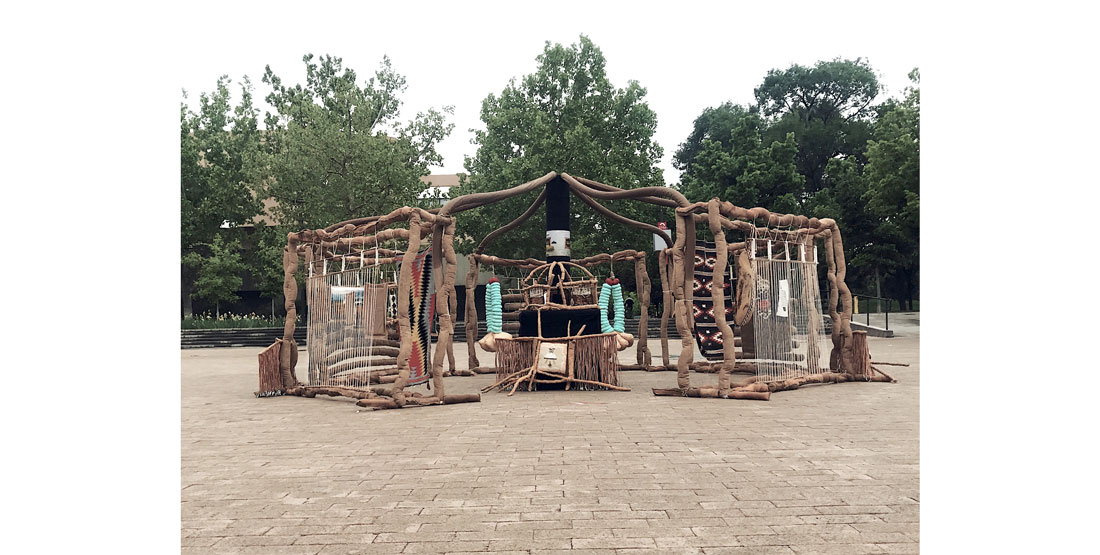
You can view his exhibit ojo|-|ólǫ́ at the Henry Art Gallery through October 25, 2026 (just down the street from the Burke).
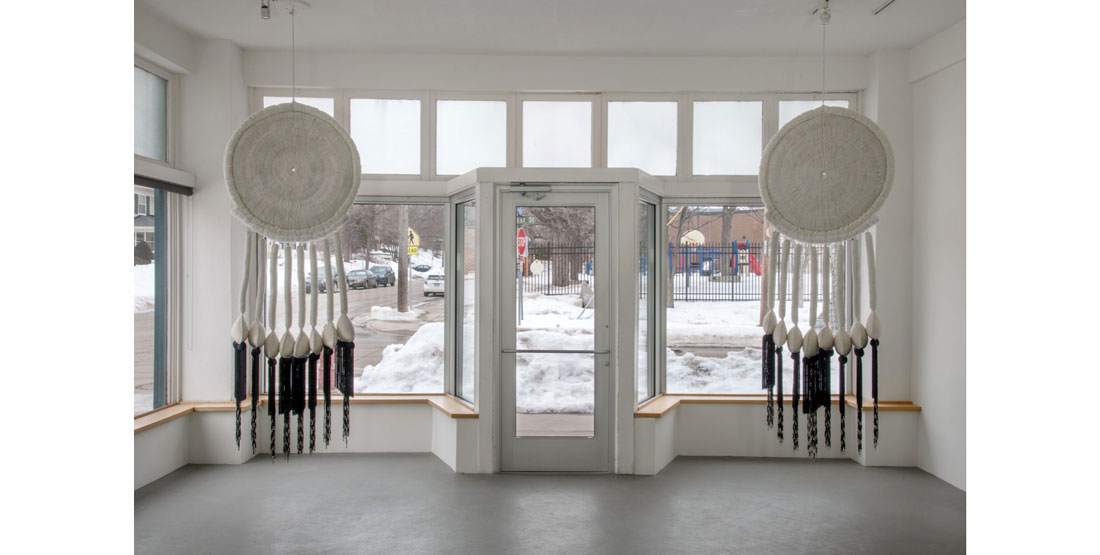
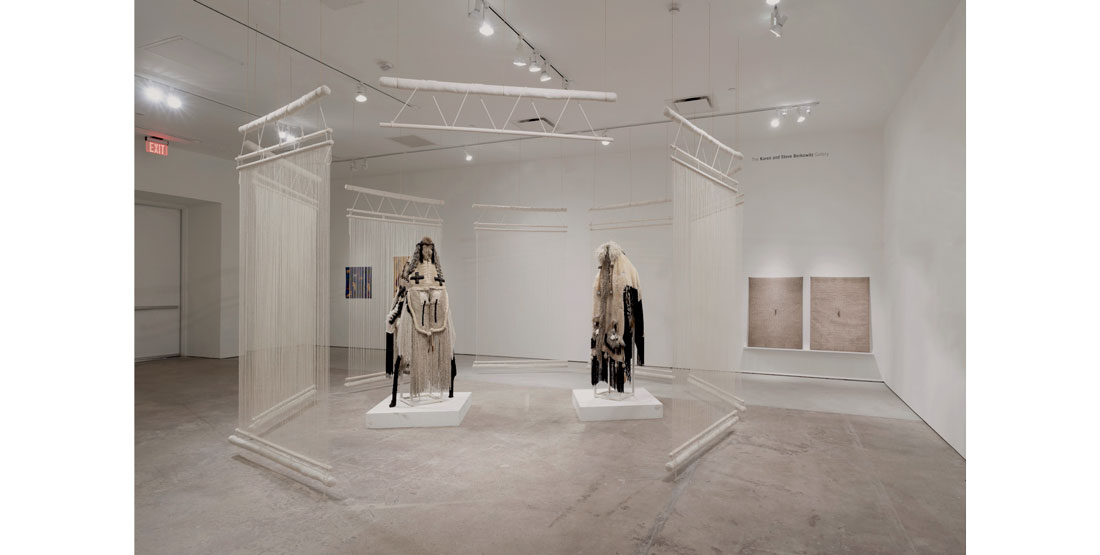
![Eric-Paul Riege: ojo|-|ólǫ́ [Installation view, Henry Art Gallery, University of Washington, Seattle. 2026].](/sites/default/files/images/culture/artist%20studio/eric-paul%20riege/Henry-20250317-146-gallery-1100x555.jpg)
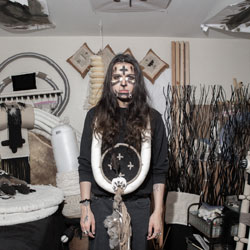
Eric-Paul Riege. Image: Nate Lemuel (Diné) of DarkListedPhotography.
About the Artist
Eric-Paul Riege (Diné) is a weaver and fiber artist working in collage, durational performance, installation, woven sculpture, and wearable art. Using weaving as both means and metaphor to tell hybrid tales that interlace stories from Diné spirituality with his own interpretations and cosmology, he understands his artworks as animate and mobile. His practice pays homage and links him to generations of weavers in his family who aid him in generating spaces of sanctuary. Riege’s recent solo exhibitions include iiZiiT [3]: RIEGE Jewelry + Supply at Canal Projects, New York (2025), Hammer Projects: Eric Paul Riege at the Hammer Museum, Los Angeles (2022–2023), and Hól ́ǫ—it xistz at the Institute of Contemporary Art Miami (2019). His recent group exhibitions include the 24th Biennale of Sydney in Australia (2024), Indian Theater: Native Performance, Art, and Self-Determination (2023), Prospect.5 Triennial in New Orleans (2022), and the Toronto Biennial of Art (2022). He holds a BFA in Art Studio and Ecology from the University of New Mexico in Albuquerque. His work is collected by Forge Project and ICA Miami, among others. He is represented by Bockley Gallery (MN) and STARS Gallery (CA). Riege is a member of the Charcoal Streaked Division of the Red Running Into the Water clan. He was born and is based in Na’nízhoozhí [Gallup, New Mexico].
Now on View at the Henry
You can see ojo|-|ólǫ́ by Eric-Paul Riege at the Henry Art Gallery through October 25, 2026.
ojo|-|ólǫ́ (pronounced oh-ho hol-ohn) is an exhibition of recent and newly commissioned work by Diné artist Eric-Paul Riege (b. 1994, Na’nízhoozhí [Gallup, New Mexico]) that includes sculpture, textile, collage, and video, activated by moments of performance. Across this work, Riege combines customary Diné practices of weaving, silversmithing, and beading with contemporary cultural forms, exploring Diné cosmology, the history of Euro-American trading posts in and adjacent to the Navajo Nation, and the notion of “authenticity” as a value marker of Indigenous art and craft.
Developed in partnership between the Henry and The Bell Gallery at Brown University, ojo|-|ólǫ́ emerged from Riege’s material research with Navajo collections housed at Brown’s Haffenreffer Museum of Anthropology and the University of Washington’s Burke Museum of Natural History and Culture. The resulting body of work celebrates the ancestral knowledge and labor contained within Indigenous-made objects, while investigating the role of museums and other institutions in the dissemination and dispossession of knowledge about Indigenous cultures. For his tactile and modular soft sculptures, Riege employs exaggerated scale and combines synthetic and natural materials to playfully question ideas of authenticity and Indigenous artistic production. Processes of making and remaking embody a living practice of exchange that draws together webs of connection across time and space.
The exhibition also includes objects from the Burke collection displayed alongside assorted personal collections from Riege’s own home and studio. The resulting non-hierarchal display blurs lines between past and present, private and public, and real and fake, animating the dynamism and dimensionality of Indigenous cultures and identities. ojo|-|ólǫ́ invites collective reflection on the practices of institutions that have accumulated Indigenous art, while advancing a call for Indigenous cultural resurgence in the present and toward our shared future.