
Photo: Chris Freidhoff
Jo Macellaro
Elementary School Teacher, Special Education
Bronx, New York
Tell us about where and what you teach.
I teach elementary school special education to students in the South Bronx, New York City—one of the poorest Congressional districts in the entire nation. I teach in an inclusion program, meaning that my students are transitioning from a self-contained special education setting into a community school. I help them to make the social and emotional transition and focus on meeting their functional and academic IEP goals to get closer to grade-level standards.
How did participating in the DIG Program impact you or your teaching?
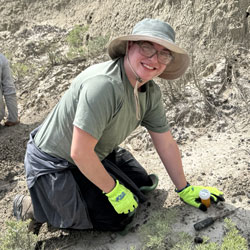
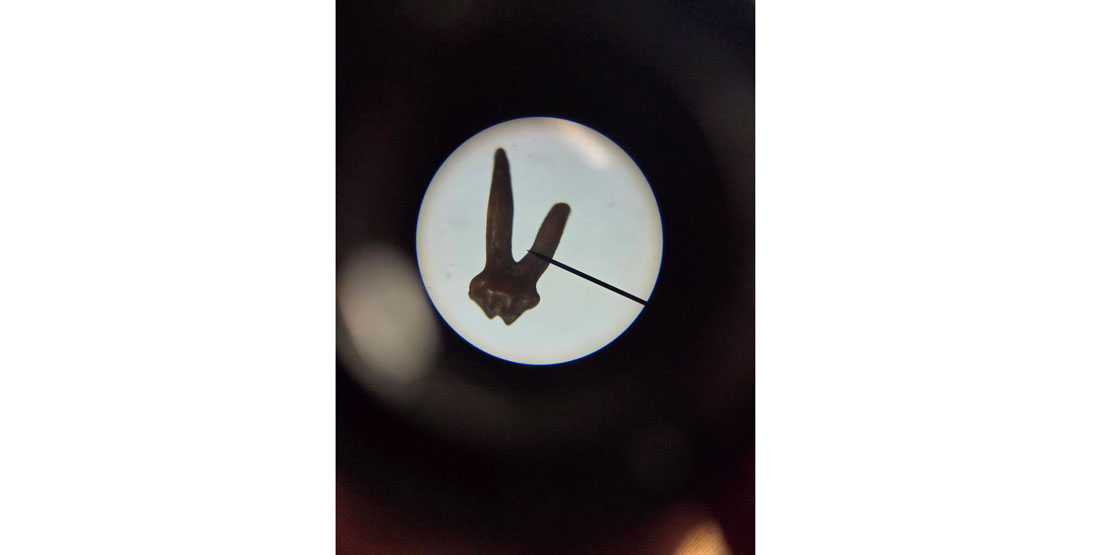
Participating in DIG Field School was an incomparable learning experience. I could read 100 books about paleontology and that would not compare to actually being at a dig site and learning by doing. I will never forget being in the rain crawling for microfossils, licking something to see if it was bone and getting a mouthful of mud! That may sound miserable, but it was actually one of my favorite days. I found a bunch of microfossils, including a theropod tooth, which was really exciting. My students loved seeing photos of me crawling in the mud!
How did participating in the DIG Program impact your students?
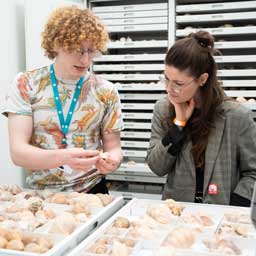
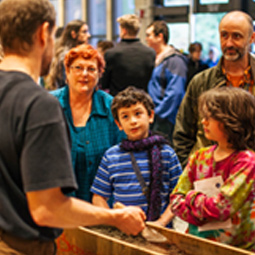
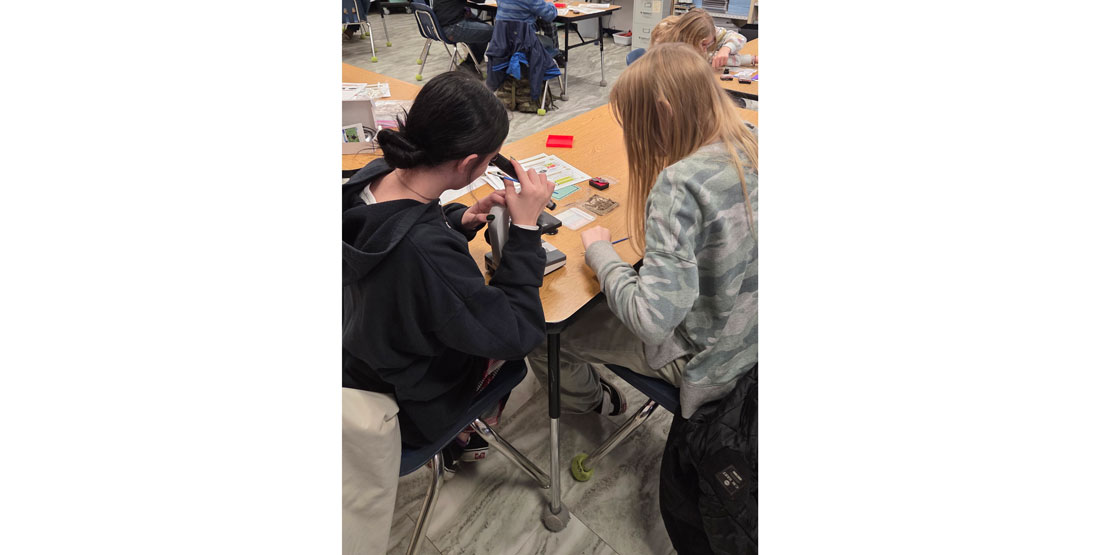
I used both DIG Boxes with my students: first the Foundations box and then the Microfossils box. My students were so excited to get their hands on all of the minerals, rocks, fossils, and casts and they loved using the hand lenses and the digital microscope. I modified the lessons to address my students' specific IEP goals. For example, to meet a goal of writing a complete sentence to restate and answer a question, I set out an array of mineral samples after the students learned about minerals, and each mineral had slips of paper with questions about that specific mineral. Students would choose a mineral and study it, then pick a question. They glued the questions into their field journal and practiced writing complete sentences to restate and answer the questions.
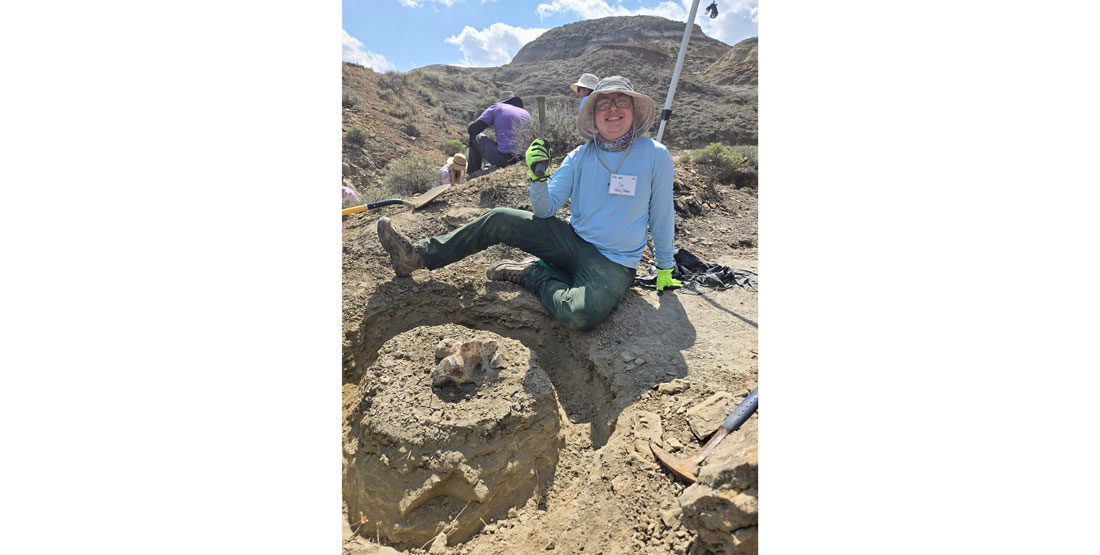
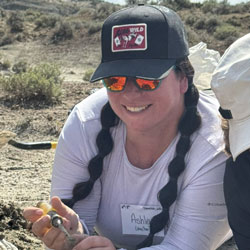
Photo: Chris Freidhoff
Ashley Karsh
Middle School Teacher
Addy, Washington
Tell us about where and what you teach.
I teach 7th & 8th grade at Summit Valley School in eastern Washington state. We are a very small rural school. I am the only 7th and 8th grade teacher in the district and I teach all subjects to the students at that grade level.
How did participating in the DIG Program impact you or your teaching?
Participating in DIG strengthened my own understanding of geology and paleontology by giving me hands on experiences and context for understanding concepts in both fields.
There may be other professional development options that may try to strengthen content knowledge and connections to NGSS (Next Generation Science Standards), but none like DIG Field School. By being immersed in the field with the paleontologists and support staff, I came away with deeper knowledge, a drive to ask more questions, and new experiences to share with my students.
How did participating in the DIG Program impact your students?
Through my participation in DIG, my students that live in a very rural section of Washington were able to have access to museum quality resources through the DIG Boxes and participate in hands-on science learning through microfossil sorting. My students loved getting to interact with all the items in the DIG Boxes and spent multiple days excitedly sorting through the sediment during our microfossil sorting. They took pride in knowing the sorting they did helped the museum catalog fossil data as well.
Do you have any additional thoughts you would like to share about the program and your classroom experience?
Just that every teacher should do this program! It's the best!
Interested in participating in the DIG Program?
Sign up for our DIG Field School newsletter and we'll notify you about upcoming DIG teacher workshops and events!
Special thanks to the Norcliffe Foundation, TEW Foundation, National Science Foundation, and David. B Jones Foundation and our numerous donors for their generous support of our DIG Field School and DIG Boxes programs.