
AT A GLANCE
Malacology Collections
Number of specimens in the collection
Species represented in the collection
Years since the collection started in 1865
Search the Collection
The Malacology Collection is currently being digitized and is available online.
Collection Overview
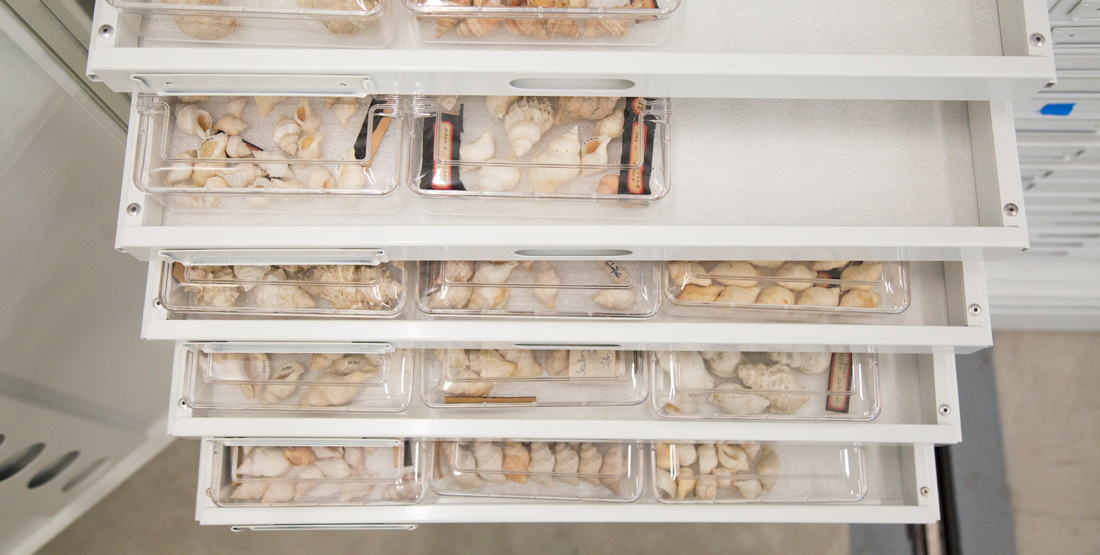
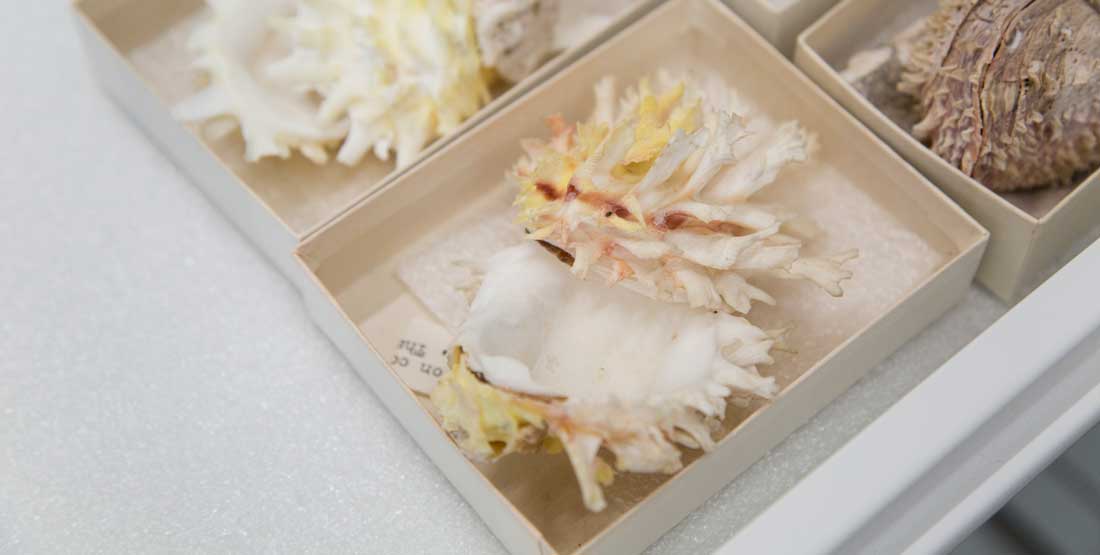
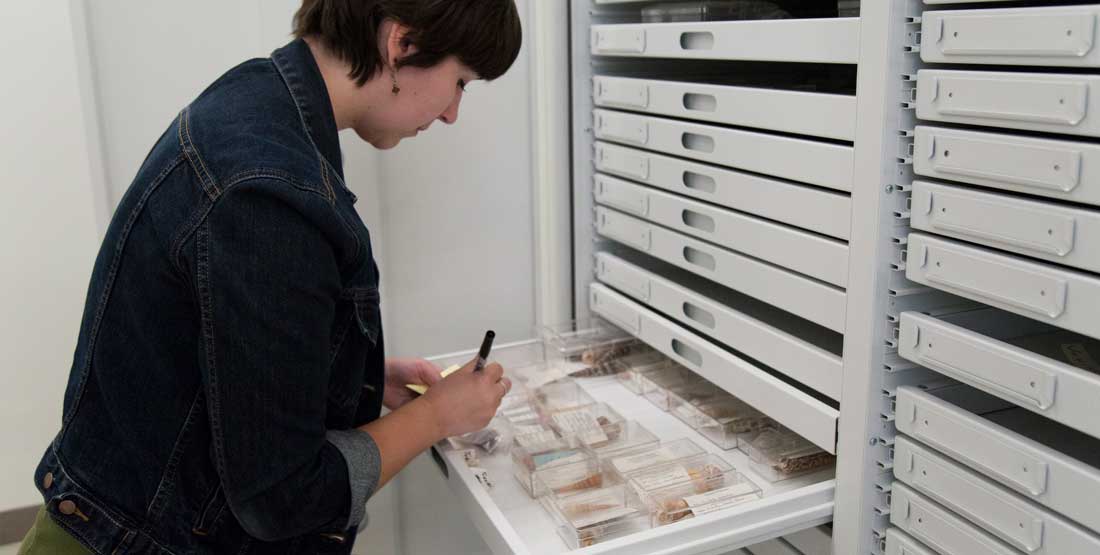
The Burke Malacology Collection represents a remarkably diverse taxonomic range of molluscs: bivalves (clams, mussels, and oysters), gastropods (snails and slugs), cephalopods (nautiluses), polyplacophorans (chitons), and scaphopods (tusk shells). While extremely broad in geographical and ecological scope, the collection is best known for its Pacific focus.
The collection formed in the late 1800s. Over time, the collection has grown extensively via donations from both researchers and the general public. Many specimens have been generously donated by shell collectors associated with the Pacific Northwest Shell Club. Today, the collection is ranked as the most extensive and valuable shell collection in the Pacific Northwest.
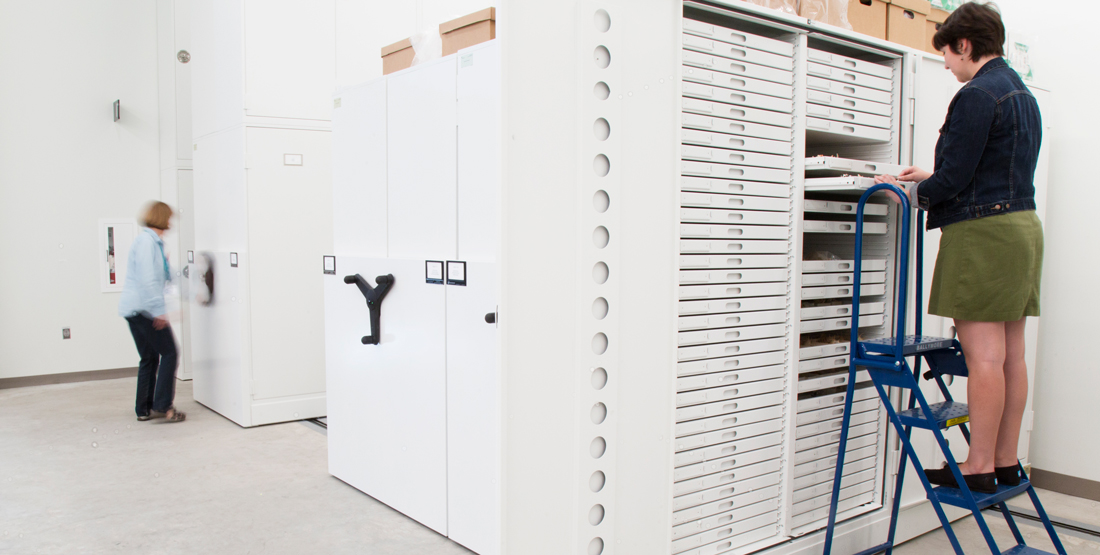
Currently, the collection is composed primarily of dry shells, with only a small, albeit increasing, number of fluid-preserved specimens. Specimens are available for study by advance request.
Nudelman Collection
Kohn Collection
Kincaid Collection
Questions & Answers
We’ve pulled together some common questions and answers related to the Burke Museum Malacology Collection. Do you have question that isn’t answered in the list below? Contact us.
Can I donate a specimen to the collection?
Donating Shell Collections
Each year, the Burke receives numerous inquiries from potential donors, offering to gift a shell collection to the museum. Indeed, the majority of our collection stems from the generous donations of researchers and shell collectors. Here, we aim to provide general information about 1) what types of collections are suitable for donation; 2) who to contact if you think that your collection may be of value; and 3) how to prepare your collection for donation to the museum:
What types of shell collections are suitable for donation?
Like most natural history museums, the Burke seeks collections that hold promise for future research (=“research ready”). Research may be biological, historical, or cultural in nature; and since we never know how collections will be used in the future, we aim to obtain as much information about each specimen as possible. Specifically, we are primarily interested in shells that come with detailed ‘collection event’ data:
- Taxonomy – What is the taxonomic name of each specimen? [e.g. common or scientific name]
- Geography – Where was the specimen collected? [e.g. country/ocean, state/province, location; latitude/longitude]
- Date – When was the specimen collected? [e.g. year, month, day; time of day]
- Ecology – What was the habitat or environmental conditions at time of collection? [e.g. habitat, substrate, depth/elevation, environmental factors, associated species]
- Collector – Who collected the specimen(s)? [e.g. surname, middle initial, first name, title]
All specimen(s) or specimen ‘lots’ should be labeled with as much of the above information as possible. For large collections (100+ specimen lots), it is particularly useful if the data already has been digitized (i.e. entered into a spreadsheet or database).
If you think that your shell collection is “research ready”, then we would love to hear from you. If the collection is lacking data, but you still believe that the shells have some other unique attribute, we encourage you to reach out to us!
Who to contact to initiate the donation process?
Please contact Melissa Frey, Collection Manager of Invertebrate Zoology, by email or phone. Contact us.
If you are local, we may be able to do an on-site visit to evaluate the collection in detail. If we are unable to assess the material in person, we may ask you to provide additional documentation (e.g. photos of the specimens with data).
How should I prepare a shell collection for donation?
Please keep in mind that donors are responsible for the packing and physical transfer of all specimens to the museum. Burke staff can provide guidance in this process, but unfortunately due to limited funding, the museum cannot cover the financial costs associated with the transfer of collections.
Once the collection has been approved for donation, you will be asked to sign a Temporary Custody Receipt, which will allow the Burke to hold the material until the acquisition is reviewed and approved. Upon final acquisition, the Burke Museum will become the legal custodians of the collection.
If you would like to help the Burke continue to care for your collection in perpetuity, please consider a financial donation to the Malacology Endowment Fund. We appreciate all donations!
How do I request a specimen loan?
Burke Malacology lends specimens to qualified institutions for exhibition, education, or scholarly research. Specimens will not be loaned to individuals except under special circumstances and with the approval of the Burke Museum Executive Director.
Loan requests are considered on a case-by-case basis and approval is contingent upon such considerations as the structural stability of the specimens; security; exhibition or research conditions at the borrowing facility; insurance, transportation, length of exhibition or research, and requirements for courier service.
Contact us for more information.
Can I visit the collection?
Access to the Malacology Collection is at the discretion of the collections manager. Requests for access are considered on an individual basis. Access may be restricted or denied (for example, information restriction imposed by donor stipulation).
Contact us for more information.
Can I have something identified?
Burke Malacology is in the business of identifying molluscs, so please feel free to submit a specimen ID request if you have a mystery shell that needs a name!
In addition to the specimen itself (or photo), please provide any collection information (geographic location, habitat, or date) that may be relevant. We will do our very best to provide feedback.
Contact us for more information.
Can I use an image of a specimen?
The Burke Museum retains the sole copyright for its holdings and all images depicting its holdings. Photographic images that are in the care of or are the property of the Burke Museum, or photographs, photocopies, or artistic renderings of collection items that are in the care of or are the property of the Burke Museum may not be used for commercial purposes without specific written permission.
Contact us for more information.
Can I become a volunteer?
We couldn’t do what we do without volunteers! Visit our Volunteer page for more information about Burke Museum volunteer opportunities and to view current openings.
Our Team
Meet the people within the Burke Museum Malacology team.
Have a general inquiry?
Additional Resources
We've compiled several online resources from outside of the Burke Museum that may also be of interest.
Washington State University Tri-Cities Natural History Museum
iNaturalist community science project
Support Malacology
Your gift makes it possible! We couldn't do what we do without generous donor support for collections care, research and public outreach.