| February 2012 | ||||||
|---|---|---|---|---|---|---|
| S | M | T | W | T | F | S |
| 29 | 30 | 31 | 1 | 2 | 3 | 4 |
| 5 | 6 | 7 | 8 | 9 | 10 | 11 |
| 12 | 13 | 14 | 15 | 16 | 17 | 18 |
| 19 | 20 | 21 | 22 | 23 | 24 | 25 |
| 26 | 27 | 28 | 29 | 1 | 2 | 3 |

The Burke offers a special event for everyone with popular annual family events like Dino Day, lectures with prominent leaders in the arts and sciences, exhibit-related programs, cultural festivals, and more!
On the first Thursday of every month, admission to the Burke Museum is FREE and the museum will remain open until 8 pm. Hands-on activities are offered each month.
The Burke Museum presents a monthly pub quiz for science buffs, culture gurus, and museum lovers. Bring your friends to the College Inn Pub and test your knowledge of the natural world. Compete with other teams for drink vouchers and other prizes. Teams are limited to 6 players. Cost: $5 per team.
Burke Trivia Night happens every first Thursday at 8 pm at the College Inn Pub.
Hosted by the Burke Museum at the College Inn Pub, 4006 University Way NE. Support for Trivia Night was provided by the University of Washington Graduate School. This is a 21+ event.
Join us for special evening of fast-paced food talk. Nine food experts will offer six-minute presentations on topics ranging from what we ate 10,000 years ago and the power of women farmers to bees in literature and how to subsist on wild food in the city. (Plus tips on eating bugs and slugs!)
Boy Scouts and cub scouts are invited to earn their Geology awards at the Burke with a special day of earth science activities. Geologists will be on hand to answer questions and direct activities for earning the Geology Merit Badge, Webelos Geogolist Pin, Cub Scout Belt Loop, and Geology Academics Pin.
Update: The event is currently full.
Please check back for more Boy Scout events!
Contact Burke Education 206-543-5591 or email burked@uw.edu.
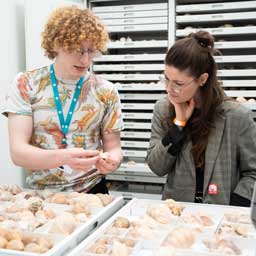
One night a year, Burke members are invited behind the scenes of the museum. Behind-the-Scenes Night is an exclusive opportunity for members to see the Burke collections, meet curators and collection managers, and learn about current research. Members will discover every Burke division, including the Herbarium, archaeology, ornithology (birds), ethnology, ichthyology (fish), mammalogy, paleobotany, vertebrate and invertebrate paleontology, and entomology (spiders & insects).
For the third year in a row, the Burke Museum is bringing a world-renowned expert on dinosaur paleontology to Seattle for a free public lecture. This year’s lecture features Dr. Luis Chiappe, who will discuss new research that shows that birds are the living descendants of theropod dinosaurs and how fossils discovered over the past 20 years have shed light on the origin of avian flight.
Emphasizing home-cooked simplicity in the spirit of the grandmothers who created the recipes, Italian cooking is at the heart and soul of many kitchens. Join PCC chef’s Iole Aguero Italian love affair where she puts her own special touch on recipes straight from Italy.
Known for the extensive use of vegetarianism, Indian cuisine reflects the styles of Indian society. With the help of Indian spices such as turmeric, cumin, and curry, Indian foods are identified as elaborate, fragrant, and more often than not, spicy. Find out more about the intricacies of Indian cuisine with PCC Chef Uma Bangalore.
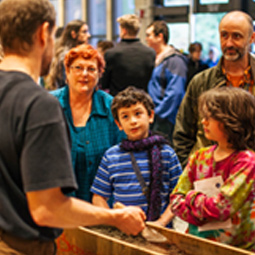
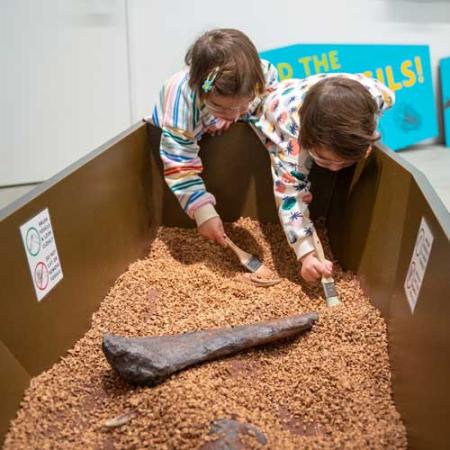
Bring the whole family to Dino Day and take a fossil journey around the globe. See and touch fossils, meet Burke paleontologists, join a fossil dig pit for kids, and more! Included with museum admission; free for Burke members.
As cultures around the world undergo dietary acculturation, a nutrition transition is occurring, accompanied by a rapid increase in the rates of obesity and diabetes. The good news is that we have the opportunity with every meal to literally EAT our way towards health. Come learn simple choices you can make to nurture/foster your wellbeing.
Turkish food is a unique blend of Middle Eastern and Mediterranean cuisines, offering an abundance of locally produced fresh foods due to a pleasant climate and rich soil. With a coastline on the Mediterranean Sea, there is no shortage of fresh seafood in the cuisine. In other areas of the country, olives trees provide an abundance olive oil. Join PCC chef, Sureyya Gokeri for quick cooking techniques and her vast knowledge of these healthy ingredients.
Join the Burke for a special event on the local revitilazation of Native food traditions. Teachers from the Northwest Indian College will join members of local tribes to present activities, food walks, and talks illuminating the resurgent interest in traditional Native American diets.
Most people do not look for geology in the sidewalks of Seattle, but for the intrepid geologist any good rock can tell a fascinating story. The stones that built downtown Seattle provide a range of rocks equal to any assembled by plate tectonics. David Williams will lead a 1.5-mile-long walk to discover fossils as large as cinnamon rolls, rock used by the Romans to build the Colosseum, and stones ranging from 3.5-billion to 120,000-years-old. Along the way he will discuss history, geology, architecture, and give you a new way to appreciate the urban wilds of Seattle.
A diet centered around plant foods such as fruits, vegetables, nuts, seeds, grains, and beans is considered one of the most health promoting diets due to the rich range of nutrients it offers. “Plant-based” does not mean a completely vegetarian diet because certain nutrients are better obtained from animal foods.
The Burke Museum will host the 5th Annual Fossil Preparation and Collections Symposium next Spring. The symposium will include platform presentations, posters, roundtable discussions, workshops, and potentially a local field trip. Details, including registration materials and call for abstracts, will be posted on the website soon—watch for details.
PCC Natural Markets will be on site helping kids make their very own trail mix. This fun and engaging activity for kids 12 and under will be located in the front lobby.
Join award-winning authors William Dietrich, Thor Hanson, and Judith Roche as they lead classroom and field-based sessions. They bring years of experience as writers, journalists, bloggers, and teachers. Each is an attentive observer who weaves together history, science, and field time into well-crafted, thought-provoking writing about the natural and cultural world.
Because of its proximity to water, Japanese cuisine is deftly intertwined with a wide variety of fresh seafood. With a focus on the quality of ingredients and presentation, Japanese cooking emphasize seasonal foods that are at their peak. Explore fresh Japanese foods with PCC Chef, Kanako Koizumi.
Incorporating local, seasonal foods into our diets can connect our bodies with our environment, culture, and regional food system. Learn practical tips to help bring more seasonal foods into your diet, and why it makes sense to eat more salads in the summertime and spices in the winter months.
Mushroom lovers are in luck for Pacific Northwest mushrooms are in abundance locally and regionally. Pacific Northwest mushrooms are very versatile and can be used in a variety of dishes. Learn more about cooking with Pacific Northwest mushrooms with PCC chef, Becky Selengut.
Cuban cuisine is a wonderful fusion of Spanish, African, and Caribbean spices, flavors, and techniques. The result is a unique flavor that encompasses several cultures. A tropical island climate fosters fruit and root vegetables with fresh seafood that are often incorporated into a conventional dish of rice and beans. Come try this blending of flavors from different cultures with PCC chef, Yary Oslund.
“Organic, natural, free-range, sustainably grown…” some of the claims we see on food packages mean more than others. Many consumers don’t realize that the word “organic” on a food guarantees much more than the absence of pesticides. In this presentation, Nick explains the basics of organic produce, meat, dairy, and packaged foods.
Regarded as a culinary nation where famous chefs and foods are born, French cuisine is at the height of refined dining, involving the mind and all of the senses. Simple ingredient such as locally grown fruits, vegetables, and fungi along with fresh, baked goods such as baguettes and croissants can be used in elaborate meals and desserts. Discover more about French cuisine with PCC chef, Lynne Vea.